
Already have the Magic Pack? You have this. Magic Companions ships inside it. This standalone download is for people who want the snail and the eye without the spellcasting or the dungeons.
Don’t enable both in the same world. They’re harmless sitting side by side in your pack list, but switching both on at once loads the same mobs twice. Pick one.
What it is
Minecraft’s tameable mobs mostly do one thing: they follow you. A wolf follows you and bites what you bite. A cat follows you and sits on your chest. Once you’ve tamed one, the interesting part is over.
LLS Magic Companions is two creatures built the other way round — the taming is where they start being interesting.
Where they live
Both now turn up on their own, without a spawn egg.
| Shell | Where it lives |
|---|---|
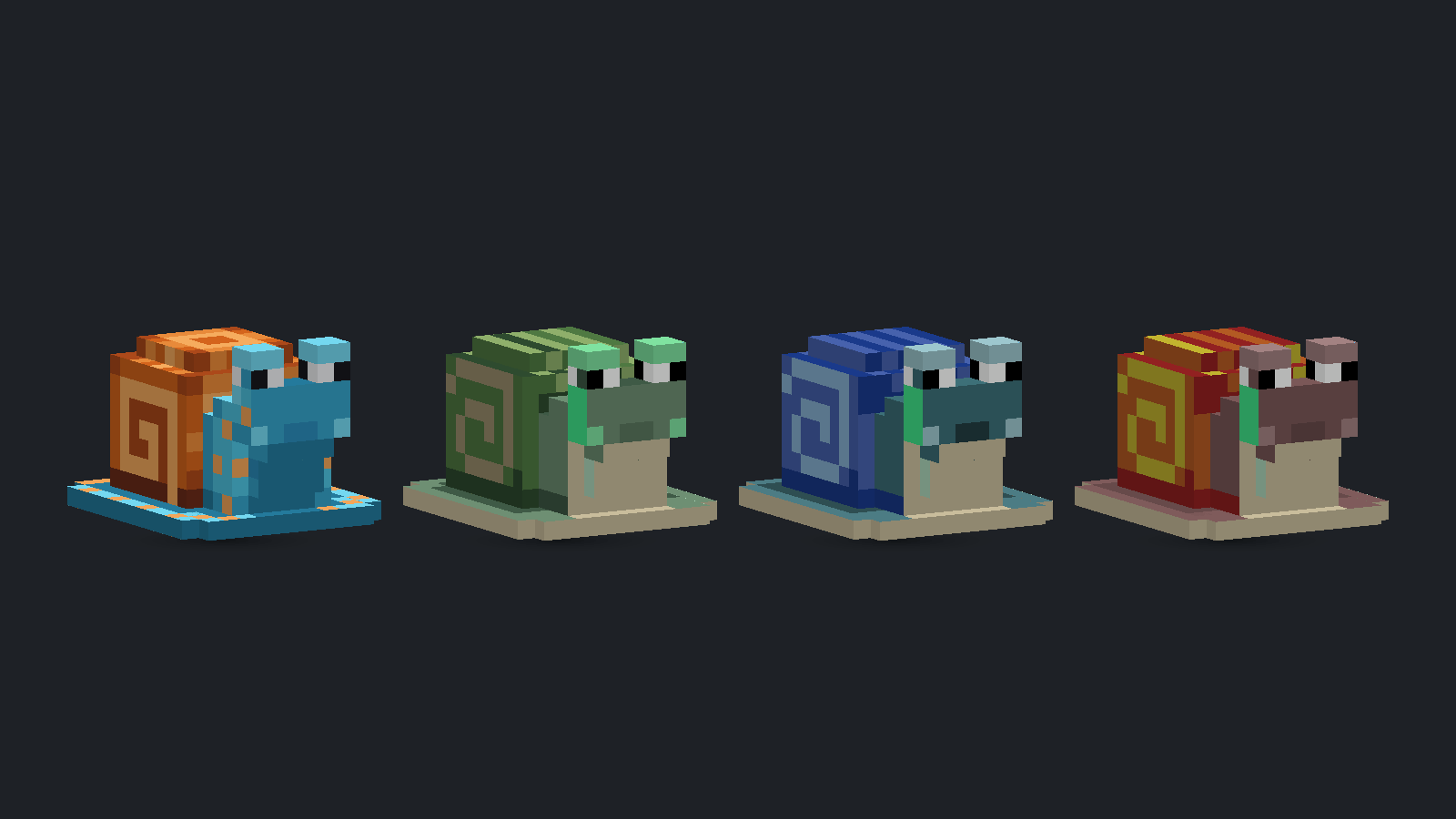
| Lava | Hot and dry — desert, savanna, badlands |
| Ice | Cold — frozen biomes, ice plains, taiga, anywhere snow-covered |
| Earth | Wooded — forest and jungle |
| Aqua | Lush caves, underground |
Snowy forests read as cold rather than wooded, so a taiga gets ice snails and never earth ones. The original shell isn’t a wild spawn at all — it’s what you get from a spawn egg and from breeding, so the one you raise yourself stays distinct from the ones you find.
Yongle’s Eye turns up in swamps, one at a time. Its colour isn’t decided by where it spawns — every wild eye starts the same and takes whichever dye you give it.
The Magic Snail
The snail is not a pet that trails behind you. Left alone, it goes and finds a wall.
About four out of five snails are wall-lovers. That’s a coin flip rolled once, the first time a snail thinks, and then remembered on that snail forever — so the one in your base is the one that lives on the north wall, not a random mob doing a random thing this minute. A wall-loving snail scans for a face at least two blocks tall, shuffles over to its base, crawls up to a height it picks for itself, and clings there for one to five minutes, scooting slowly sideways, occasionally drifting back down a little, before easing to the ground and choosing somewhere new.
The other one in five are floor snails. They read the light around them and shuffle toward the darkest spot they can find — under an overhang, into a roofed corner, behind something. Left running overnight, a group of snails quietly sorts itself into the walls and the shadows of wherever you put them.
Taming and riding
Snails are tamed with brown or red mushrooms — about a 40% chance per mushroom, and the same mushrooms heal them afterwards. Offer one to a snail that’s currently up a wall and it drops down to come and get it, so a wall snail is never out of reach.
A tamed snail takes a saddle and can be ridden. It has 30 health, falls slowly enough that it shrugs off most of the drop, and steps up ledges a block and a half high without needing a jump — it just flows over terrain that would stop a horse. It’s slow. That is the trade.
Two things make up for the speed:
- A dash. Three-second cooldown, and a genuinely violent lunge forward.
- Walls. This is the whole point of the mount.
Riding up a wall
Ride a snail into a wall and it latches. From there you drive it in two dimensions: W climbs, S descends, A and D sidle along the face, and sneak drops you off.
While you’re latched, the snail’s facing locks to the wall, so swinging the camera around to look at the view can’t break the grip, and you’re posed sideways on its back rather than sitting bolt upright in mid-air. It’s a mount that treats a cliff, a ravine wall or the side of your own build as ground.
Yongle’s Eye
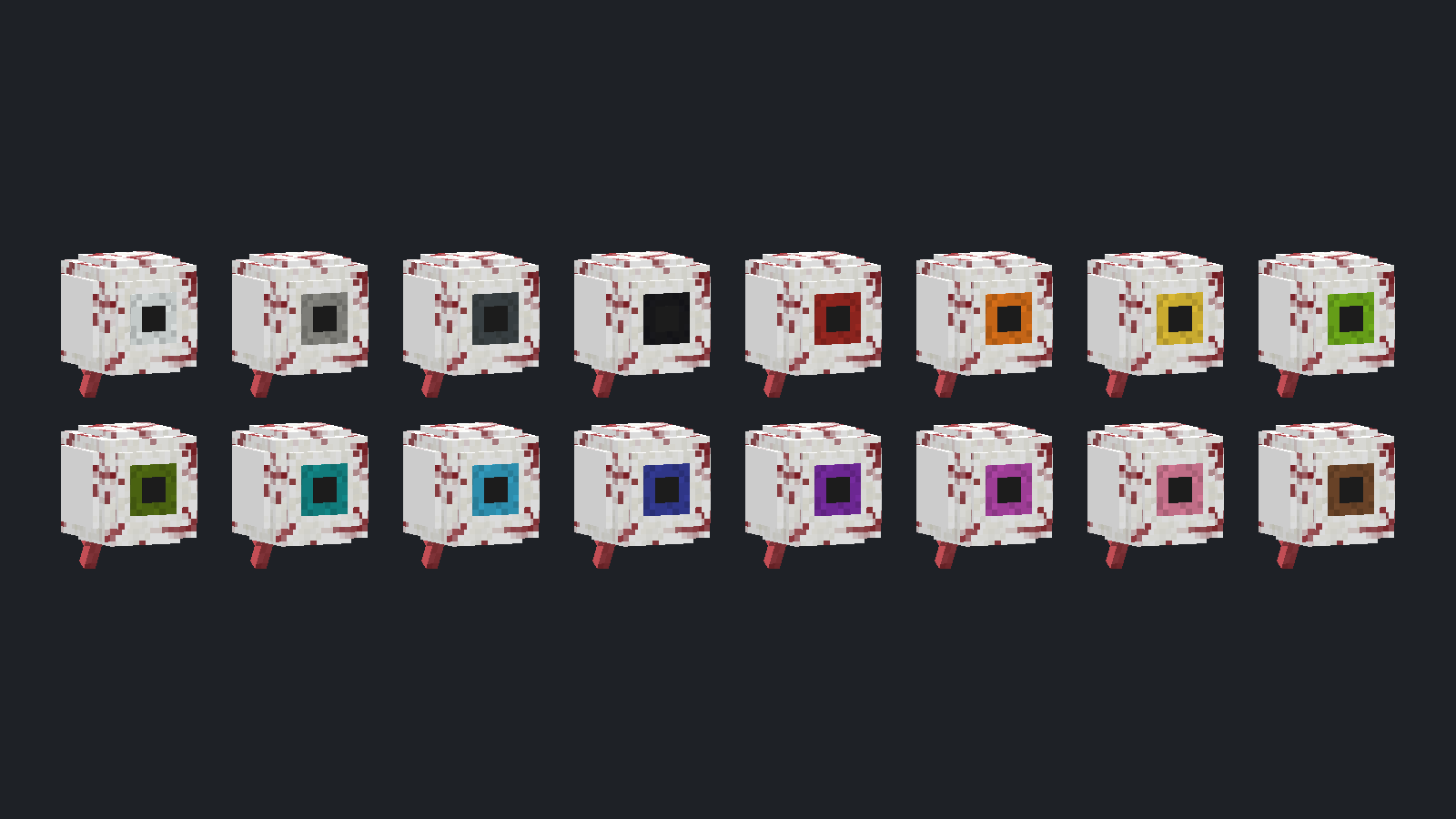
The other companion is a single floating eye on a length of optic nerve. It bobs in place, drifts off to look around when nothing is happening, and takes no fall damage — it doesn’t land, so there’s nothing to land badly.
It’s tamed with an Ender Eye, about a one-in-three chance per eye, and the same item heals it. Taming doubles its health from 10 to 20 and turns on following — it keeps within a couple of blocks of you and re-closes the gap once you’re ten blocks out.
Sixteen irises
A tamed eye can be dyed, and the dye goes into the iris rather than over the whole model. All sixteen Minecraft dyes work, plus an ink sac for black, and the change is permanent and per-eye — it’s stored as an entity property, so it survives reloads and every eye in a group can be a different colour.
They’re also nameable and leashable, which between them is enough to keep a specific one somewhere specific.
Where it’s at
Version 1.1.0. Both companions are built and working — the models, animations, taming, dyeing, saddle, dash and wall-riding are all in, and as of this version they spawn in the world on their own instead of needing a spawn egg.
Still ahead: sounds, and the tuning pass that only comes from other people playing it.
The snail’s idle brains run on the scripting API rather than vanilla AI goals, which is the only way to get “find a wall and live on it for four minutes” out of Bedrock at all. They’re deliberately paced — one snail is considered per dimension per pass — so a large herd doesn’t trip the script watchdog.